

Methamphetamine Finally Enters a Big City Mayor's Race
Hyper-pure meth from Mexico has been a major driver of homelessness and mental illness in Los Angeles and across the US for a decade, but rarely mentioned until recently.

I’m relieved that methamphetamine and its connection to homelessness and mental illness have finally entered a major city’s mayor’s race.
In a recent debate, Los Angeles mayoral candidate Spencer Pratt said a “super-meth” was now driving homelessness in Los Angeles. I prefer to call it “hyper-pure” meth, because I think it is more accurate.
But either way, the drug is a major driver of homelessness and mental illness in Los Angeles certainly, and in many parts of our country, and has been for years.
It’s just that meth is rarely mentioned when these issues come up.
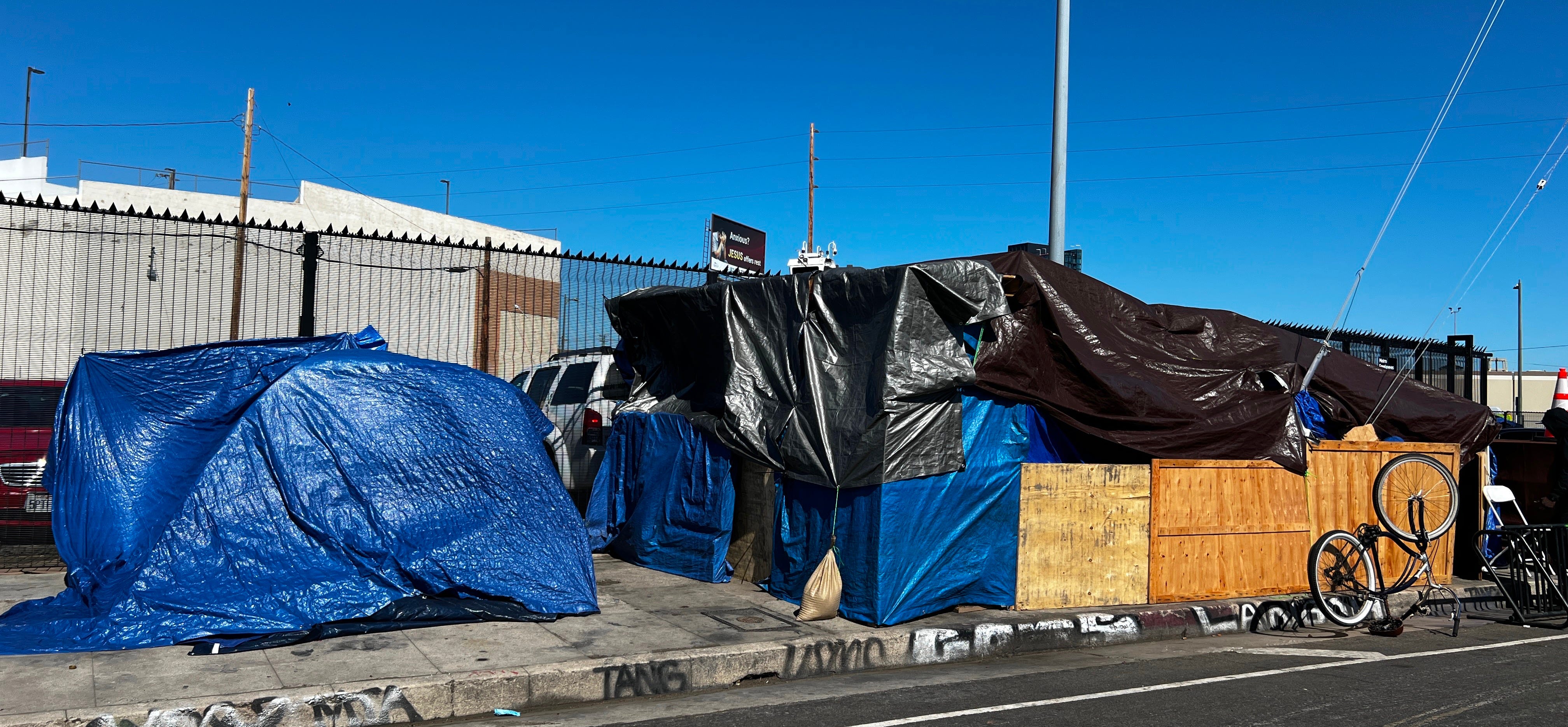
Last week, I spoke at a community corrections conference in Ohio, and with inmates at the new jail in Columbus. “It causes schizophrenia,” said one inmate, who said he’d used the drug since 2022. Numerous conference attendees told me similar stories among their clients, dating to when hyper-pure meth first arrived in Ohio between 2016 and 2018. One psychologist, for example, said meth creates “symptoms of schizophrenia and bipolar disorder … persistent cognitive decline, paranoia, hallucinations, and delusions,” and often leads “to cardiovascular issues (stroke and heart attack) and many other health concerns.”
This is not new.
Twenty years ago, what was sold on the street as meth was really only 40 or 50 percent meth, the rest being cheap filler dealers used to expand their supply.
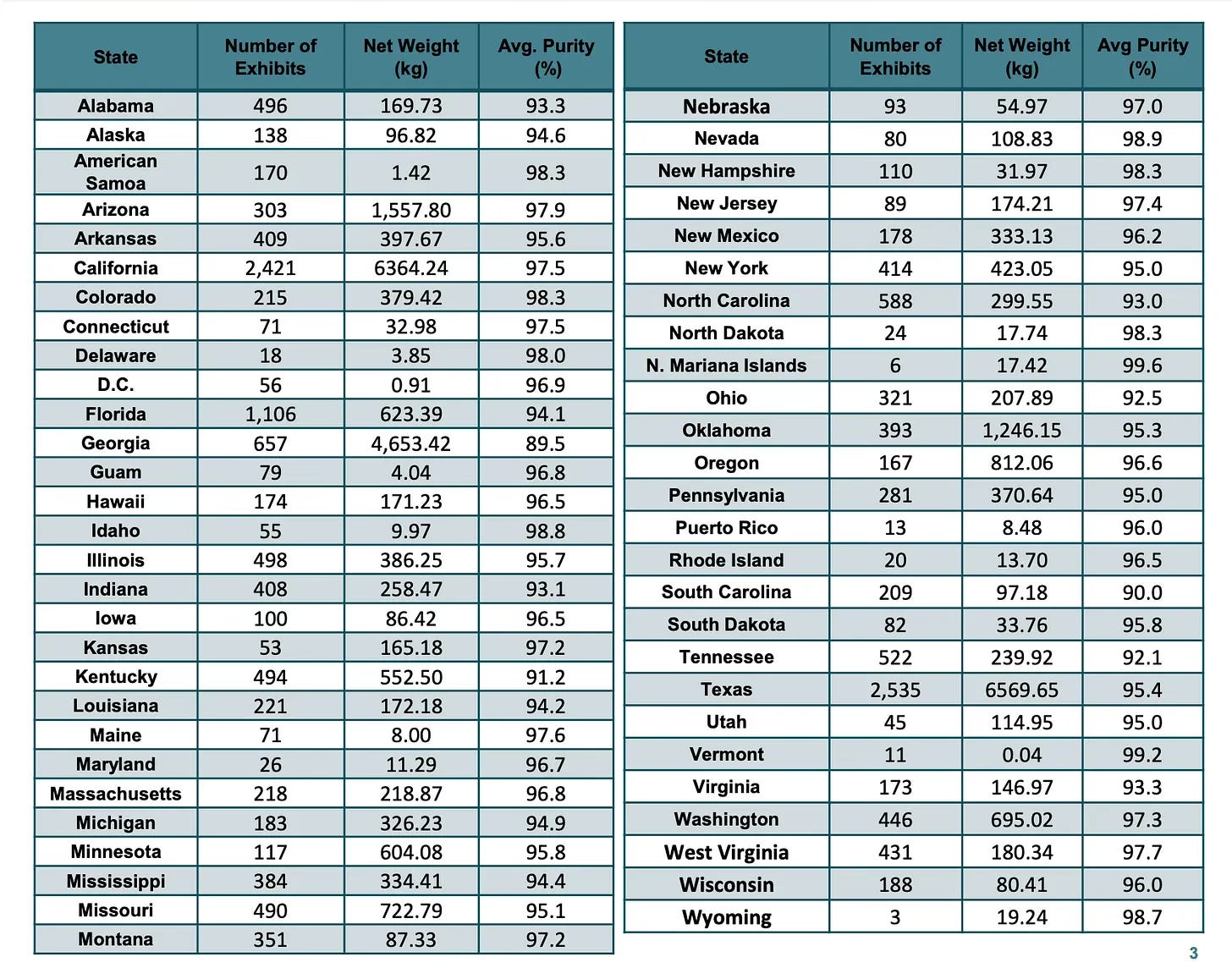
Today, meth made in Mexico sold on U.S. streets routinely measures more than 90 percent pure meth, state by state – virtually no filler.
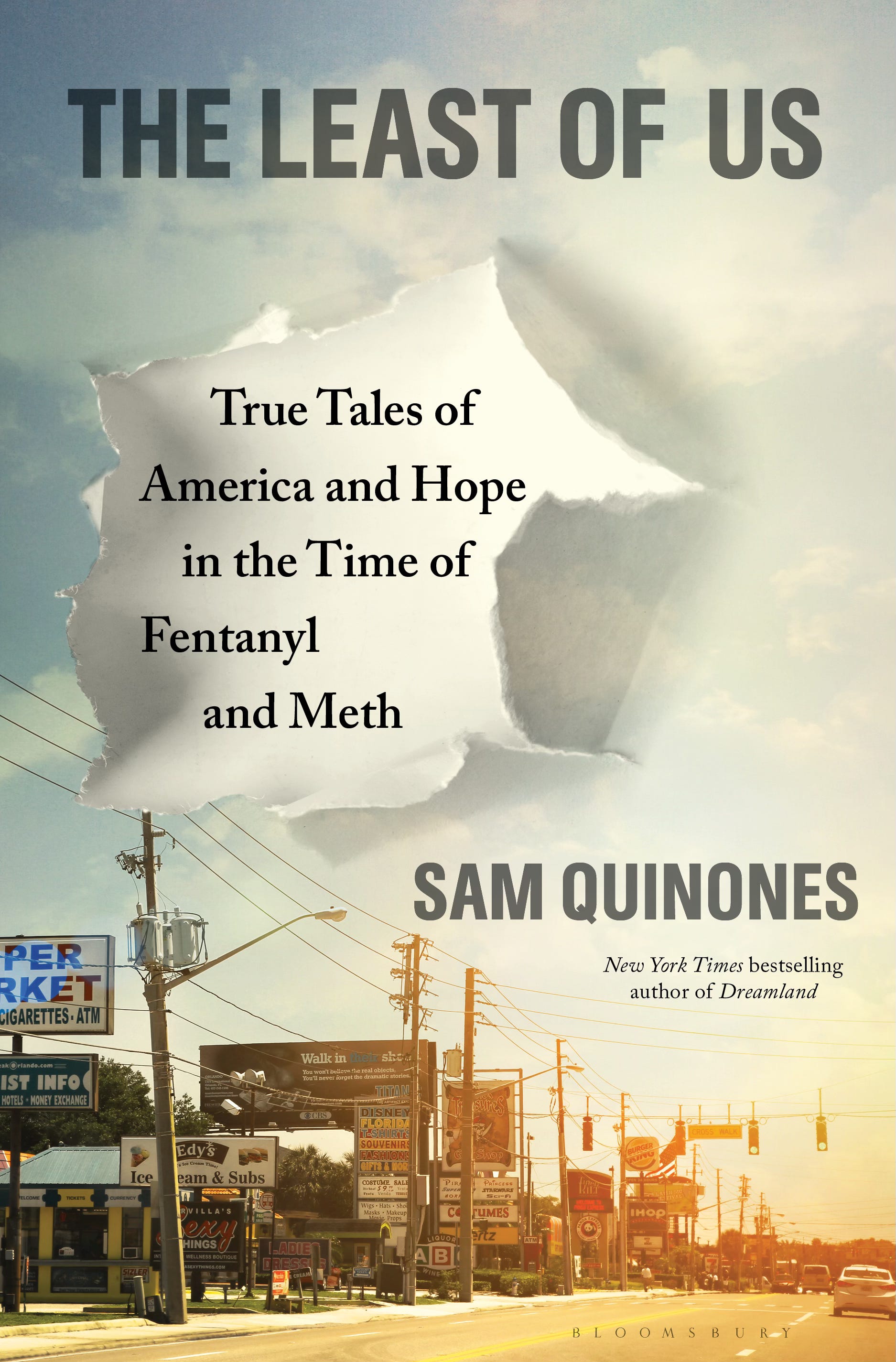
This is part of my 2021 book, The Least of Us: True Tales of America and Hope in the Time of Fentanyl and Meth*.
Here’s my reporting on what happened:
For many years, the Mexican traffickers used a decongestant called ephedrine as the principal ingredient in their methamphetamine. Ephedrine is difficult to make. Traffickers never could get enough ephedrine to make enough quantities of meth sufficient to cover more than parts of the western United States. Elsewhere, local meth cooks used Sudafed pills to extract ephedrine to make small quantities of low-purity, high-priced meth.
Then, in 2008, the Mexican government reduced the allowed amounts of imported ephedrine, which traffickers had always siphoned for their illicit uses.
They switched to another method – old but new to them, with a central ingredient called phenyl 2 propanone, an industrial chemical -- P2P for short.
This is one of an occasional series of stories, extending the work I did in my book, The Least of Us, on the effect on our streets of fentanyl, methamphetamine, mental illness & homelessness.
The P2P method has only one advantage over the ephedrine method, but this advantage is central to today’s hyper-pure meth story.
P2P can be made many different ways, using a variety of legal, cheap, widely available toxic chemicals. Government couldn’t crack down on P2P as it had on ephedrine. Unlike ephedrine, traffickers could make meth using P2P in great quantities. They were constrained only by access to these ingredients. But that’s almost limitless as they control Mexico’s main shipping ports to the extent they need to.
By 2013, staggering quantities of cheap, very pure Mexican meth were flowing into the United States. By 2014, meth had dislodged crack from its 20-year reign as the main drug for sale on Skid Row in Los Angeles.
By 2016, hyper-pure meth was covering the Midwest. By Covid, meth was reaching into New England, which had never seen much meth before.
Remarkably, Mexican production capacity was such that hyper-pure meth covered the country and its price dropped by 80 percent. Local meth cooks couldn’t compete and vanished.
That change transformed the drug. Meth went from a drug of sparse regional use into one with devastating, nearly nationwide impact, especially on the twin issues of homelessness and mental illness that bedevil so much of our country.
Street dealers, meanwhile, seem reluctant to cut – dilute -- their supplies, perhaps fearing customers would go to their competition. Whatever the case, samples of seized methamphetamine have not dipped below 90 percent purity since then, according to the DEA.
We can assume this is the highest purity at which methamphetamine has been consumed by a national population. The Nazis commercialized meth under the brand name Pervitin to keep German workers working and soldiers marching, but I’ll assume Pervitin was never this potent.
Ephedrine-based meth, consuming and addictive, was a social drug. Users wanted to be around others. It was big in the gay community.
The effects of this hyper-pure meth, however, were quite different. Users were plunged into their own sleepless, tormented isolation and symptoms of profound mental illness. They grew paranoid, belligerent, violent, deranged, and quickly homeless.
This is what Angelenos are referring to when they say the nature of homelessness seemed to change eight or 10 years ago. And why homelessness is so often associated with squatters who take over abandoned buildings and wreak havoc, including causing fires that threaten neighbors.
Indeed, as in recent months I have reported on L.A. neighborhood outrage over encampments, trash, fires and more, most of what angers Angelenos would seem reasonable to connect to methamphetamine.
Meth-induced psychosis became indistinguishable from organic schizophrenia, except that the latter mostly affects young men 17 to 30.
Meth addiction made people quickly homeless. Given the drug’s relentless prevalence, potency and cheap price, people who became homeless for any number of non-drug-related reasons used it to stay awake all night, for days, to defend against rape, robbery, beatings. They fell into meth addiction and were chained further to the streets.
There is no medical treatment for meth addiction, as there is for opioid addiction. The best solution seems to be separation from the drug. (One recovering addict I interviewed for my Dreamland Podcast made this clear.) So addressing meth and all it creates is tough.
Los Angeles and other cities made it tougher by policies that enhanced the drug’s damage.
First was allowing the spread of tents.
In 2011, the Occupy movement normalized tents on L.A. sidewalks. Tents then colonized Skid Row, transforming the nature of the city’s homeless, who were now stationary and thus easy targets for drug dealers, pimps, and others. Addicts in tents, surrounded by the drug, were almost certain to never be “ready” for treatment, which they routinely refused.
In encampments, meth famously prompted hoarding of items others viewed as junk or trash. Bicycle parts were of particular interest, hence the tented “bike shops” that grew common in L.A. encampments during Covid.
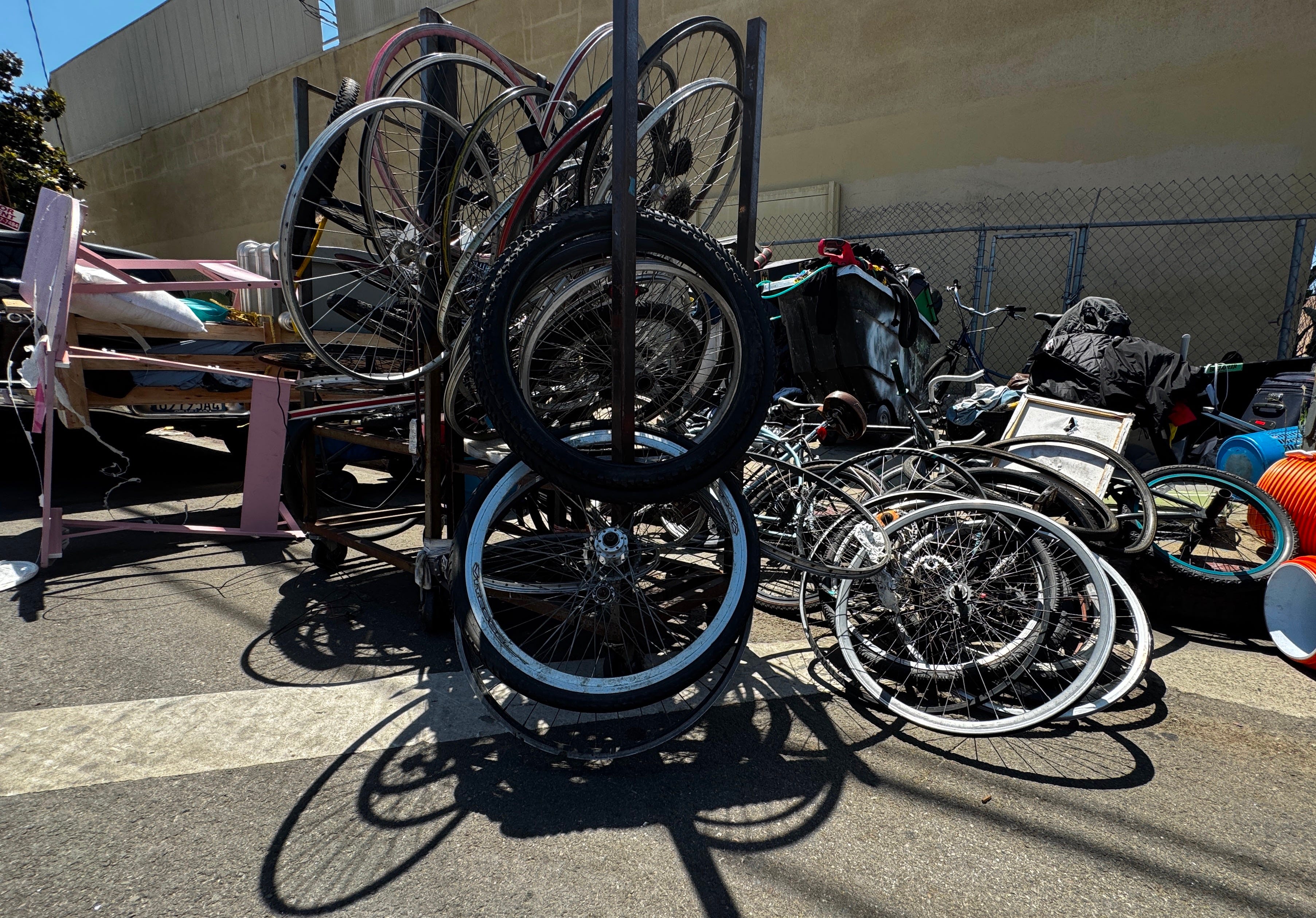
This hoarding, among other things, led to horribly unsanitary conditions on tented sidewalks, which in turn led to the re-emergence of centuries-old diseases like typhus.
All this was further encouraged by a series of court cases that the city interpreted to mean it could do nothing about those encampments. Thus, a tent-based, skidrowified homelessness, often enhanced and emboldened by meth addiction, spread to Venice, then many other districts just as this hyper-pure meth settled over the city.
This is what Los Angeles and other cities face today: A homeless problem that is hard to untangle from the hyper-pure meth relentlessly coming from Mexico.
In L.A., at last, there’s some discussion of homelessness and its connection to the drug.
The next mayor will have to find solutions using dramatically different thinking than what’s been employed up to now.
That’s a subject I’ll be writing about soon.
NOTE: *When I was writing The Least of Us (in 2020 and 2021), no one anywhere was talking about this connection between Mexican methamphetamine and mental illness. The book broke that story. While writing it, I sought answers as to why meth was so clearly creating these symptoms of schizophrenia. I found no one who could explain it. So when I wrote the book, my hunch, and that’s what I said it was, was it was due to the chemicals used to make P2P.
Since then, I’ve come to believe the cause probably has more to do with simply the great purity with which this meth is produced nowadays. That purity, however, remains connected to P2P, which is easy to make with ordinary, toxic chemicals in enormous quantities, allowing similarly huge quantities of meth. Those enormous quantities have both allow meth to cover the United States, and remove street dealers’ incentive for diluting it. Hence the purity with which it leaves labs in Mexico is the purity with which it hits users’ brains in the U.S.
Thank you for reading and listening!
I do not paywall this newsletter. … But if you’d like to keep it going, with original, independent and unexpected reporting, please consider becoming a paid subscriber.
It supports my journalism and ensures that every article remains open to everyone.
Thank you for your support!
For more on meth in America:
Why the Purity of Methamphetamine Matters
Methamphetamine in Wine Country
A Conversation with the Business Improvement Director of Skid Row
Also, you can read my book, The Least of Us: True Tales of America and Hope in the time of Fentanyl and Meth.
PHOTO OF THE WEEK: Neighborhood ice cream man, Glassell Park, Los Angeles.

Thanks for the info - I haven’t seen it anywhere else. The purity aspect is a detail that’s been ignored, as has the growth of meth abuse, with fentanyl stealing the spotlight in recent years. Of course it’s an old problem. I read “Methland” not too long after it was published c. 2008. There aren’t many treatments of the relevant problems as dreary and depressing, and it heavily influenced my thinking about a range of issues. Homelessness was a problem then too, of course, but has mushroomed and metastasized since. I lean lib but the apparent refusal of the Democratic Party to recognize the relationship between border control and illicit drug traffic is such a ubiquitous Achilles heel that it begs the question of high-level complicity. Am not a conspiracy theorist so I’ll stop there. Maybe a Dem could make political hay out of standing up against the Nazi Stormtrooper drug.
We have a smaller version of the same problem here in Spokane. I'd put more emphasis on those 9th circuit decisions. The city council occasionally pretends to think about the problem, but those satanic court decisions give the council a handy excuse to avoid their responsibility. "Don't blame us, blame the Constitution." It's not a coincidence that the worst homeless problem matches the 9th circuit's territory.